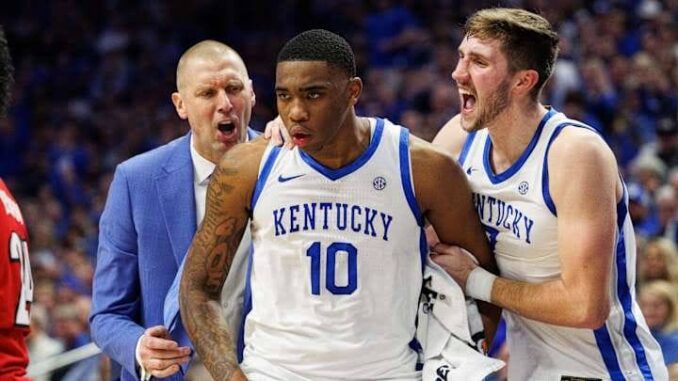
On the surface, Kentucky looks every bit like a team built for a deep NCAA Tournament run. The Wildcats have stacked wins, explosive scoring nights, and a roster that blends high-end talent with growing confidence. But behind the scenes, insiders around the program are quietly pointing to one concern they believe could surface at the worst possible time.
The issue isn’t obvious in the box score. Kentucky’s offense still hums, and their athleticism overwhelms many opponents early. The worry lies in how the Wildcats respond when games slow down—particularly against disciplined teams that can take away transition opportunities and force long, physical half-court possessions.
Several scouts note that Kentucky can become overly reliant on individual shot-making when tempo drops. When early shots don’t fall, the offense can stagnate, leading to rushed decisions and defensive breakdowns on the other end. Tournament opponents with veteran guards and strong defensive schemes are expected to test that weakness relentlessly.
There’s also concern about late-game execution. While Kentucky has shown flashes of poise, insiders say the team hasn’t consistently proven it can close tight games against experienced, pressure-tested opponents. In March, when every possession carries weight, those moments often decide seasons.
None of this means Kentucky isn’t dangerous—far from it. In fact, insiders believe the Wildcats’ ceiling remains among the highest in the field. But unless the team sharpens its half-court discipline and late-game composure, that hidden weakness could be exposed when the margin for error disappears.
As one analyst put it, “Kentucky has the talent to beat anyone. The question is whether they can stay composed when talent alone isn’t enough.”
With the postseason approaching, how quickly the Wildcats address this concern may determine whether their momentum leads to a championship run—or an early, painful exit.
Leave a Reply