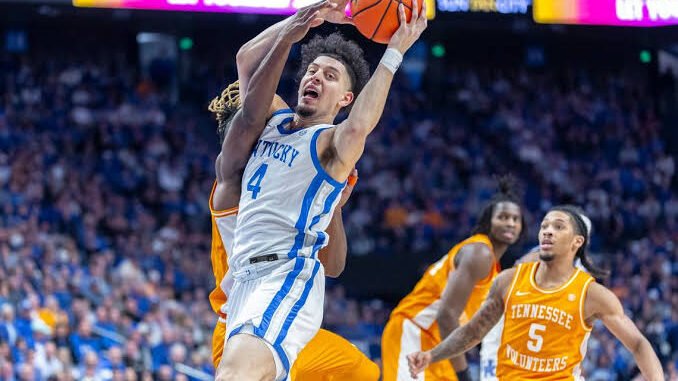
LEXINGTON, KY — There’s an unwritten rule that has governed college basketball for decades: you win big by leaning on stars, controlling the tempo, and playing “the right way” when the game tightens up.
Kentucky is quietly breaking that rule this season — and somehow, it’s working.
Instead of centering everything around one or two headline names, the Wildcats have embraced something far more controversial in today’s NCAA landscape: controlled chaos. They’re rotating lineups aggressively, trusting unconventional late-game combinations, and allowing possessions to look messy — as long as the pressure stays relentless.
And here’s the part that has rivals uneasy: Kentucky keeps getting away with it.
Traditionally, blue-blood programs are expected to shorten the rotation, slow the game down, and protect leads with predictability. Kentucky has done the opposite. In tight moments, they’re pushing pace, switching defensively without hesitation, and letting multiple players initiate offense. It flies in the face of what most coaches preach in February.
Opponents have noticed. Coaches prepare for one version of Kentucky, only to face another by halftime. Scouting reports lose relevance when roles shift possession by possession. One night it’s defense-first lineups closing games. The next, it’s energy players overwhelming opponents with tempo.
Critics argue it’s reckless — that this style will eventually collapse under tournament pressure. Fans on both sides of the debate point to history: March usually rewards discipline, not improvisation. But supporters counter with a dangerous truth — this Kentucky team doesn’t panic, even when games get uncomfortable.
What makes it even more controversial is how calm the Wildcats look while doing it. No visible hierarchy. No forced hero ball. Just trust, movement, and pressure applied in waves. That kind of freedom is supposed to backfire at this level. So far, it hasn’t.
Analytics quietly back it up. Kentucky’s efficiency late in games hasn’t dipped despite the lack of a traditional closer. Turnovers forced, second-chance points, and opponent fatigue are doing the damage instead. It’s not flashy. It’s unsettling.
The bigger question looming over the season isn’t whether Kentucky can keep breaking this unwritten rule — it’s whether the rest of the NCAA is ready to deal with a Kentucky team that refuses to play by it.
Because if this approach holds in March, it won’t just change Kentucky’s ceiling.
It might force college basketball to rethink one of its oldest assumptions.
Leave a Reply