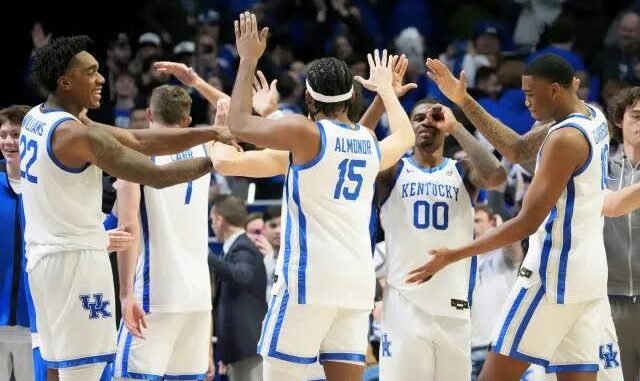
Right now, Kentucky basketball doesn’t have just one problem — it has a pattern. And the more games go by, the harder it is to ignore.
It keeps starting the same way. A slow first half. Missed defensive assignments. Empty possessions that turn into easy points for the opponent. By the time Kentucky wakes up, the damage is already done, and the Wildcats are once again stuck trying to climb out of a hole they helped dig themselves.
This isn’t about talent. Nobody questions that this roster has enough skill to compete with anyone in the SEC. The issue is what happens before the final ten minutes — and it’s becoming a theme that defines this season more than any single loss ever could.
The numbers tell a brutal story. Kentucky has repeatedly put itself in early deficits, struggled to control the tempo, and allowed opponents to dictate the physicality of the game. When the Wildcats finally lock in, they often look like the better team. The problem? Basketball games aren’t won in just one good stretch.
Mark Pope has tried different lineups, different rotations, and different in-game adjustments, but the same script keeps showing up. Defensive breakdowns lead to transition buckets. Offensive possessions stall into rushed shots. And suddenly, Kentucky is chasing the game instead of controlling it.
What makes it even more frustrating for fans is that this pattern is fixable — at least on paper. The effort level in the second halves has shown what this team is capable of when it plays with urgency and discipline. But that raises an uncomfortable question: why does it take falling behind for this group to play its best basketball?
Inside the program, the focus has quietly shifted from tactics to habits. Coaches and players alike have pointed to communication, focus, and consistency — the unglamorous parts of the game that don’t show up in highlight reels but decide outcomes.
The ugly truth is this: until Kentucky breaks this cycle of slow starts and reactive basketball, it won’t matter how much talent is on the floor or how strong the late-game pushes look. The pattern will keep costing them games — and confidence.
For a program with championship expectations, that’s the most worrying sign of all. Because right now, the biggest opponent Kentucky is facing isn’t across the court.
Its itself
Leave a Reply