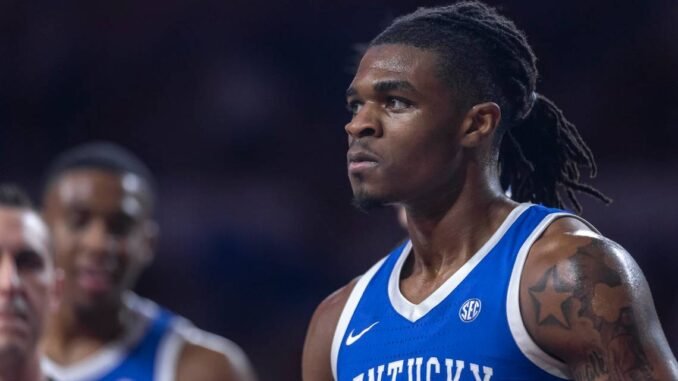
In a move that has sent shockwaves across the college basketball and philanthropic communities, Kentucky Wildcats standout Otega Oweh has officially launched a $10 million foundation aimed at fighting hunger and poverty across underserved communities in the United States and abroad.
Dubbed the “Oweh Foundation for Hope,” the initiative promises to provide food security programs, youth empowerment initiatives, and funding for sustainable development projects in low-income neighborhoods — a bold and unprecedented step for a current NCAA athlete.
Standing before a packed press conference at Rupp Arena, Oweh declared, “This is bigger than basketball. I’ve been blessed with a platform and resources most people my age don’t have. It’s my responsibility to use that for something real — something that helps people who’ve been forgotten.”
The announcement was met with widespread praise from fans, former players, and even Kentucky head coach Mark Pope, who called the move “a defining moment for college sports and a reflection of true leadership.”
But not everyone is convinced.
While many laud Oweh’s generosity and forward-thinking initiative, some critics have begun to question the timing and motives behind the announcement — especially with NBA Draft conversations intensifying and Oweh’s market value skyrocketing amid endorsement deals with Nike and EA Sports.
Social media was quick to ignite with divided opinions. One prominent sports blogger tweeted, “Love the cause, but let’s not pretend this isn’t also great PR. Strategic timing, brand polish, and NBA optics — it’s all part of the game.”
Others have also raised concerns about NCAA regulations, and whether Oweh’s philanthropic work skirts the gray areas of amateurism now complicated by NIL (Name, Image, and Likeness) policies.
Still, for many, the impact outweighs the noise.
“Otega is putting his money where his heart is,” said Kentucky alum and former NBA player Rajon Rondo. “That deserves applause, not suspicion.”
As the foundation gears up for its first major projects — including a school feeding program in Eastern Kentucky and a clean water campaign in Lagos, Nigeria — Oweh seems unfazed by the criticism.
“I’m not here to play politics,” he said. “I’m here to feed people.”
Only time will tell how the legacy of this bold move unfolds — but for now, Oweh stands at the intersection of sports, social change, and public scrutiny, all before turning 22.
Leave a Reply