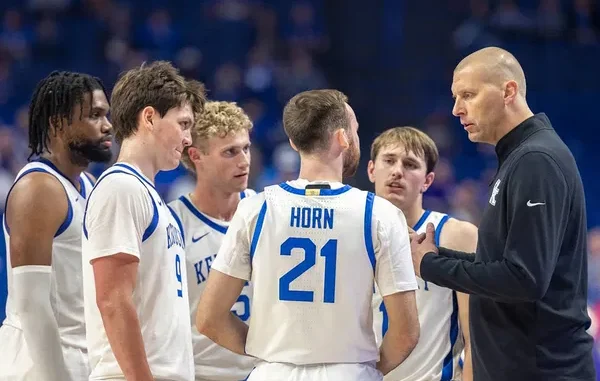
For years, Kentucky’s game flow followed a familiar rhythm—fast starts, occasional lulls, and stretches where opponents could dictate tempo. This season, that rhythm has been flipped on its head, and it traces back to one coaching adjustment that has quietly reshaped how the Wildcats control games from opening tip to final horn.
The change centers on Kentucky’s approach to pace management. Instead of pushing tempo at all costs, the staff has empowered players to read matchups and game situations before accelerating. Early offense is still there, but it’s now selective, intentional, and built around advantage creation rather than sheer speed. When nothing is there, Kentucky is comfortable pulling the ball out, resetting, and forcing defenses to guard deeper into the shot clock.
That flexibility has made Kentucky harder to disrupt. Opponents who once relied on quick runs or defensive pressure to swing momentum are finding fewer opportunities. The Wildcats are spending longer stretches in control, minimizing empty possessions and turning games into extended tests of discipline rather than track meets.
Rival coaching staffs have taken notice. Scouting reports that once emphasized speeding Kentucky up are being rewritten midseason. Teams that press aggressively are discovering that Kentucky is now prepared to punish overextension with backdoor cuts, quick reversals, and patient ball movement that leads to high-quality looks late in possessions.
Defensively, the adjustment is just as impactful. By controlling offensive tempo, Kentucky is consistently setting its defense, allowing cleaner rotations and more physical half-court coverage. Transition breakdowns—an issue in past seasons—have been reduced, keeping opponents from scoring in easy bursts.
The ripple effect is showing up late in games. Kentucky is no longer forced into rushed decisions when margins shrink. Instead, the Wildcats dictate how possessions are played, choosing when to speed up and when to slow everything down. That control is what’s making rival staffs scramble for answers—because preparing for Kentucky now requires defending multiple tempos, not just one.
As conference play intensifies, this single adjustment may prove to be one of the most important developments of Kentucky’s season. It’s not flashy, but it’s changing the way games feel—and why Kentucky is increasingly the team setting the terms, not reacting to them.
Leave a Reply