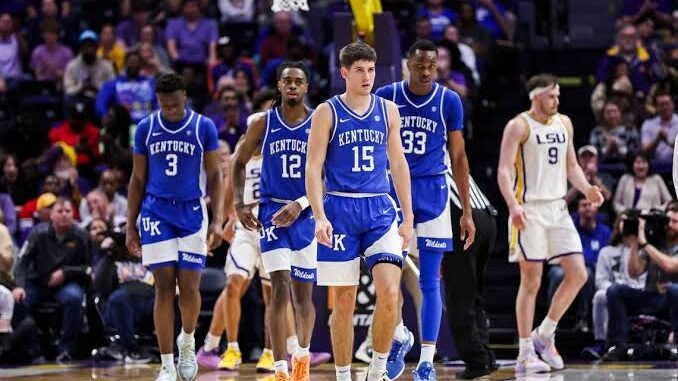
While much of the SEC has leaned into pace, scoring bursts, and lineup experimentation, Kentucky drew a firm line in one place this season: defensive accountability. No matter the opponent, venue, or game flow, the Wildcats refused to bend on effort, positioning, and communication on the defensive end — and it’s becoming the clearest separator in conference play.
From the opening tip, Kentucky’s defensive standards have been non-negotiable. Missed rotations are corrected immediately. Ball-watching is punished with quick substitutions. There’s a clear expectation that every player on the floor talks, tags, and recovers. It’s not just about stopping shots — it’s about eliminating easy ones.
That refusal to compromise has quietly reshaped how games unfold. Kentucky opponents aren’t getting the same clean early looks or comfortable stretches they rely on against other SEC teams. Even when shots fall, they’re contested, rushed, and earned. Over time, that pressure chips away at offensive rhythm and confidence.
What makes the approach stand out is its consistency. Whether facing a top-tier offense or a team near the bottom of the standings, Kentucky’s defensive focus doesn’t waver. There’s no “energy dip” game, no casual possessions. That reliability has allowed the Wildcats to survive scoring droughts and still control outcomes.
Late in games, the advantage becomes obvious. While other teams scramble to tighten things up, Kentucky is already operating at playoff-level intensity. Close games turn into grinding possessions where execution matters more than talent — and that’s where Kentucky thrives.
Inside the SEC, coaches have begun adjusting game plans, knowing there are no defensive shortcuts against this team. Kentucky isn’t winning because they’re flashier. They’re winning because they never let go of the one thing that travels, holds up under pressure, and breaks opponents over forty minutes.
By refusing to compromise defensively, Kentucky has created a standard that others are struggling to match — and it’s why they’re starting to separate themselves in the SEC race.
Leave a Reply