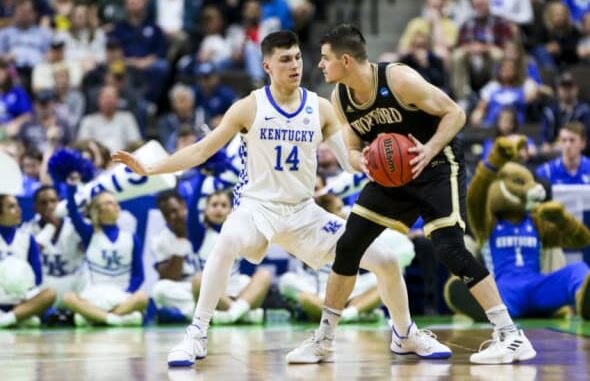
Kentucky isn’t dominating headlines. They aren’t universally crowned contenders. And that’s exactly what’s making them terrifying.
While national attention drifts toward flashier programs, Kentucky is quietly becoming the kind of team opponents hope to avoid when the bracket drops—not because of hype, but because of matchups, numbers, and a style that’s proving brutally effective.
The first warning sign is how uncomfortable Kentucky makes elite teams feel. Under Mark Pope, the Wildcats aren’t relying on explosive individual runs. Instead, they’re forcing opponents into long defensive possessions, late-clock decisions, and uncomfortable shot profiles. Teams that thrive on rhythm and pace suddenly look rushed, hesitant, and out of sync.
The data backs it up. Kentucky ranks among the most efficient teams when it comes to points allowed per possession in half-court situations, an area that historically decides tournament games. Opponents aren’t just missing shots—they’re taking worse ones. Analysts tracking shot quality note a steady rise in contested attempts against Kentucky, especially late in games.
Then there’s the depth problem.
Unlike teams built around one or two stars, Kentucky’s production comes from multiple lineups. Scoring doesn’t fall off when substitutions happen. Defensive intensity doesn’t dip when rotations change. That flexibility creates a nightmare scenario in March, where foul trouble, fatigue, and scouting adjustments usually expose weaknesses. Kentucky simply moves to the next look.
Insiders also point to mental resilience as a separator. Close games that once felt like coin flips are now leaning Kentucky’s way. Coaches around the league privately acknowledge that the Wildcats don’t panic when momentum shifts. They slow the game, trust the system, and wait for mistakes—an approach that frustrates teams built on runs and emotion.
What’s making Kentucky even more dangerous is perception. Polls and projections still treat them like a step below the elite. That means no fear factor in the early rounds, no exaggerated scouting urgency, and just enough doubt to keep opponents confident—until it’s too late.
One assistant coach from a rival program put it bluntly: “They don’t beat you the way you expect. And by the time you adjust, the game’s already slipping.”
That’s the real threat.
Kentucky doesn’t overwhelm you with spectacle. They wear you down, possession by possession, mistake by mistake, until the margin is gone and the pressure flips.
As March approaches, the Wildcats remain oddly overlooked. But inside coaching circles, the message is clear: this is not a team you want to see on your side of the bracket. And if Kentucky keeps trending this way, the rest of the country may find out the hard way—when preparation meets reality under the brightest lights.
Leave a Reply