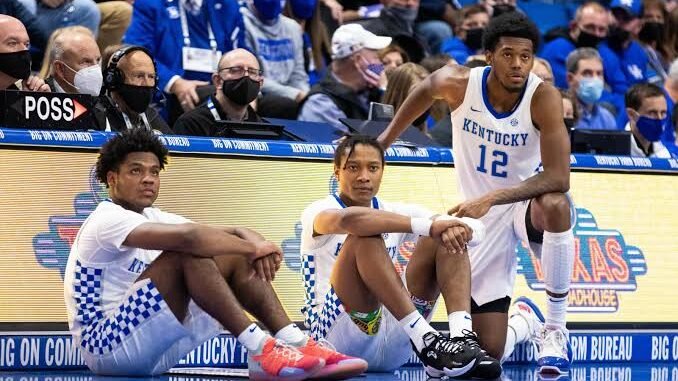
Kentucky’s championship buzz is growing by the week, and on the surface, it’s easy to see why. The Wildcats are deeper, more disciplined, and more connected than many of their recent tournament teams. But beneath the confidence and clean metrics lies one lingering issue that insiders quietly worry could unravel everything when the margin for error disappears.
It’s not scoring.
It’s not defense.
It’s shot creation when the system breaks down.
Under Mark Pope, Kentucky has embraced a structure built on movement, spacing, and trust. For most of the season, that approach has produced efficient offense and limited mistakes. The problem comes when elite defenses take away first and second options—something that happens frequently in March.
In those moments, Kentucky doesn’t always have a clear, go-to answer.
Film breakdowns show that when actions stall late in the shot clock, the Wildcats can become overly dependent on tough jumpers and rushed decisions, rather than controlled, high-quality looks. Against average teams, the system recovers. Against top-tier tournament opponents, those empty possessions tend to pile up fast.
So why isn’t this being talked about more?
Part of it is optics. Kentucky’s balanced scoring masks the issue. No single player is carrying the offensive load, which looks great in box scores—but also means there isn’t an obvious closer fans can point to when things tighten. Another factor is recent success in close games, which has created a belief that execution will simply “figure itself out.”
Insiders suggest that confidence may be hiding urgency.
Opposing coaches have already started testing Kentucky late, switching aggressively and forcing isolation situations they’re less comfortable in. The blueprint isn’t obvious yet, but it’s there—and it’s quietly being shared in scouting circles.
To be clear, this isn’t a fatal flaw. In fact, it’s fixable. Development of a late-game package, clearer hierarchy in crunch time, or one player embracing the moment could flip the narrative instantly. But if it goes unresolved, this weakness has the potential to surface at the worst possible time—with a season on the line.
That’s why some around the program are uneasy despite the wins. The title push is real. The talent is real. The system works.
But March doesn’t reward perfection—it punishes hesitation.
And until Kentucky proves it can consistently manufacture points when everything breaks down, this quiet flaw will remain the one thing capable of ending the run before it ever reaches the final weekend.
Leave a Reply