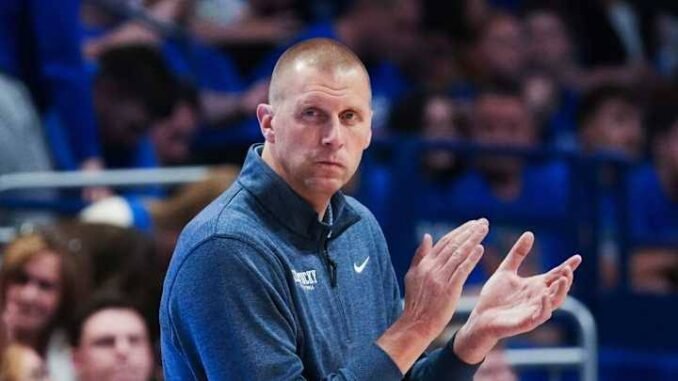
As the season unfolds, a clear pattern is emerging in Kentucky Wildcats losses, and opposing coaches are quietly building game plans around it. While Mark Pope’s Kentucky team has shown flashes of elite offense and improved spacing, one tactical weakness continues to resurface at the worst possible moments — defensive breakdowns against disciplined half-court execution, especially late in games.
In losses this season, Kentucky has struggled to consistently guard teams that slow the pace, value the ball, and force the Wildcats to defend multiple actions in one possession. Opponents have found success attacking Kentucky’s help-defense rotations, drawing two defenders on penetration and then kicking out to open shooters or slipping bigs behind the defense. The result has been a steady diet of high-percentage looks at crucial stretches.
What makes this issue more concerning is how predictable it has become. Teams are intentionally pulling Kentucky out of transition — where the Wildcats thrive — and turning games into half-court chess matches. In those moments, Kentucky’s defensive communication has wavered, leading to missed switches, late closeouts, and fouls that stop momentum.
Another factor teams are exploiting is Kentucky’s occasional overcommitment to ball pressure. While aggressive on-ball defense is part of Pope’s identity, disciplined opponents are using quick ball movement to punish that aggression. When Kentucky doesn’t force turnovers early in possessions, they often end up scrambling late — a scenario that has repeatedly swung games away from them.
To be clear, this isn’t a talent issue. The Wildcats have the athletes, length, and depth to be an elite defensive team. But until the rotations tighten and late-game defensive discipline improves, opponents will continue targeting this vulnerability.
The good news for Kentucky fans? Tactical weaknesses are fixable. With adjustments in communication, situational defense, and end-of-game schemes, this trend doesn’t have to define the season. The bad news? The rest of the SEC — and beyond — has already taken notes.
And until Kentucky closes that gap, this weakness will remain the first thing circled on every opponent’s scouting report.
Leave a Reply